The Minister of Tourism, Ng Yen Yen, who is a very keen gardener, has decided to use tourism to drive the upgrading of parks and gardens in Malaysia. In August 2010 the Ministry appointed me as Consultant for Parks and Gardens. Since then I have been involved in many site visits and meetings.
My first task was a 'hot potato': to steer the redevelopment of the Water Mall at the Penang Botanic Gardens into a water garden. The grant money had been spend on poorly conceived structures, as a result of which public opinion had turned negative. The Ministry was stung and I had only six months to redevelop the area using the small amount of money left. I hope by June this year to have Victoria lilies and other water plants fully established, and to have a respectable water garden on show.
Next are public gardens in Malacca, Fraser's Hill, Cameron Highlands and Raub to be upgraded. I hear there still others in the pipeline.
I hope, during my tenure, to get botanists appointed to take charge of the botanic gardens. We now have public 'botanic gardens' in Penang, Malacca, and Kuala Lumpur that are only botanic in name. With no botanists in charge there are no programmes for research, conservation, interpretation or education.
I also want to establish apprentice training schemes for gardeners so as to upgrade gardening as a creative profession.
Sunday, January 16, 2011

Tuesday, January 04, 2011
A touch of Guilin at The Haven in Ipoh
I grew up in Ipoh where the landscape is dominated by limestone hills known as karst. As a boy scout, I spent over 100 nights camping out in Tambun at the edge of Ipoh, close to an elongated karst formation that we named the ‘Marilyn Monroe’ because of its curvaceous reclining silhouette. According to geologist Barnard Pearson, the karst of Ipoh and the Kinta Valley are parts of a super limestone formation stretching from South China (Guilin) through Indochina and Thailand (Phuket) into Malaysia. The limestone was deposited at the bottom of the sea over 200 million years ago, as shells of marine animals. When the Indian landmass collided with and merged with Eurasia 45 million years ago,the Himalayas were pushed up by the frontal impact, while the sea floor to the south-east, with its limestone beds, was pushed up as collateral effects. The uplifted limestone then began to erode because of the mildly corrosive action of carbon dioxide dissolved in rainwater. As rainwater percolated through cracks in the limestone it formed caves that got bigger and bigger as their sides slowly dissolved away. Eventually the caves got so big that their roofs fell in, leaving the side walls as vertical cliffs. However, perhaps because of tropical weathering, the karst formations in Malaysia are more rounded than those at Guilin.
The karst formations have a unique flora. When I became a professional botanist,I returned to Ipoh to explore this flora. One of my treasured finds was Isonandra perakensis, a small tree with copper-coloured leaves, on the top of a hill that I had climbed as boy. This species was first discovered in the 19th Century and had not been seen again until I rediscovered it.
There is now at Tambun a classy new condominium development called The Haven, the central feature of which is a karst formation rising 140 ft high from a lake of crystal clear water. The water in the lake wells up from a natural spring. Three blocks of condominiums are being built on one side of the lake, on what was formerly a fruit and vegetable farm. On the other side of the lake is a massive karst formation rising up to 1400 ft. With binoculars, I could make out Cycas, orchids and other unique plants on the sheer cliffs. I stayed one night in the show house and enjoyed the cool night breeze on a balcony overlooking the lake. Early next morning I led a small group to the base of the limestone massif and we were soon in the middle of a large patch of flowering wild gingers. The developer, Superboom, has spared no effort to conserve the karst vegetation and the lake. The Haven is a first class development befitting a first class location.
I would like to see the karst formations in the Kinta Valley protected and cherished as in Guilin, but whereas Guilin is the centre of a booming tourist industry that ensures the protection of its superb scenery, Ipoh has failed to attract sustained investment interest. Indeed, the Kinta Valley has been suffering a severe and continuous drain of young and energetic people for the past 50 years. Of my own classmates only two went back to make careers in Ipoh. I think it is inevitable that youth and energy will move to where new opportunities are actively created. Developments such as the Haven will bring new people, new money and new ideas to Ipoh and the Kinta Valley. Already the development of The Haven has stirred intense debate in Ipoh about Ipoh. In Kuala Lumpur, where a new property development is launched every month, one hardly notices the continuous building and rebuilding. Ipoh and Kuala Lumpur are two hours apart by car but 50 years apart in other matters.
The karst formations have a unique flora. When I became a professional botanist,I returned to Ipoh to explore this flora. One of my treasured finds was Isonandra perakensis, a small tree with copper-coloured leaves, on the top of a hill that I had climbed as boy. This species was first discovered in the 19th Century and had not been seen again until I rediscovered it.
There is now at Tambun a classy new condominium development called The Haven, the central feature of which is a karst formation rising 140 ft high from a lake of crystal clear water. The water in the lake wells up from a natural spring. Three blocks of condominiums are being built on one side of the lake, on what was formerly a fruit and vegetable farm. On the other side of the lake is a massive karst formation rising up to 1400 ft. With binoculars, I could make out Cycas, orchids and other unique plants on the sheer cliffs. I stayed one night in the show house and enjoyed the cool night breeze on a balcony overlooking the lake. Early next morning I led a small group to the base of the limestone massif and we were soon in the middle of a large patch of flowering wild gingers. The developer, Superboom, has spared no effort to conserve the karst vegetation and the lake. The Haven is a first class development befitting a first class location.
I would like to see the karst formations in the Kinta Valley protected and cherished as in Guilin, but whereas Guilin is the centre of a booming tourist industry that ensures the protection of its superb scenery, Ipoh has failed to attract sustained investment interest. Indeed, the Kinta Valley has been suffering a severe and continuous drain of young and energetic people for the past 50 years. Of my own classmates only two went back to make careers in Ipoh. I think it is inevitable that youth and energy will move to where new opportunities are actively created. Developments such as the Haven will bring new people, new money and new ideas to Ipoh and the Kinta Valley. Already the development of The Haven has stirred intense debate in Ipoh about Ipoh. In Kuala Lumpur, where a new property development is launched every month, one hardly notices the continuous building and rebuilding. Ipoh and Kuala Lumpur are two hours apart by car but 50 years apart in other matters.
Friday, December 03, 2010
Horticultural carbon now available for home gardens
Good news for those who would like to try horticultural carbon for home gardening! Horticarbon is now available in 5kg and 10kg bags at 10 and 18 Malaysian ringgit respectively, at the new plant shop at the 1 Utama Shopping Mall.
From the Rain Forest at 1 Utama, go out onto the service road, walk under the bridge and the place is to the right.
Horticultural carbon is charcoal made of compressed sawdust and graded in two sizes: 1-5mm and 5-12mm. It used to be available only in half-ton bags that needed four men to lift. The new packing is more convenient. This is essentially the same as BIOCHAR.
Those who need more information can find it my earlier blogs. Also by googling biochar or horticultural carbon.
From the Rain Forest at 1 Utama, go out onto the service road, walk under the bridge and the place is to the right.
Horticultural carbon is charcoal made of compressed sawdust and graded in two sizes: 1-5mm and 5-12mm. It used to be available only in half-ton bags that needed four men to lift. The new packing is more convenient. This is essentially the same as BIOCHAR.
Those who need more information can find it my earlier blogs. Also by googling biochar or horticultural carbon.
Wednesday, August 11, 2010
A Roberto Burle Marx garden in Kuala Lumpur
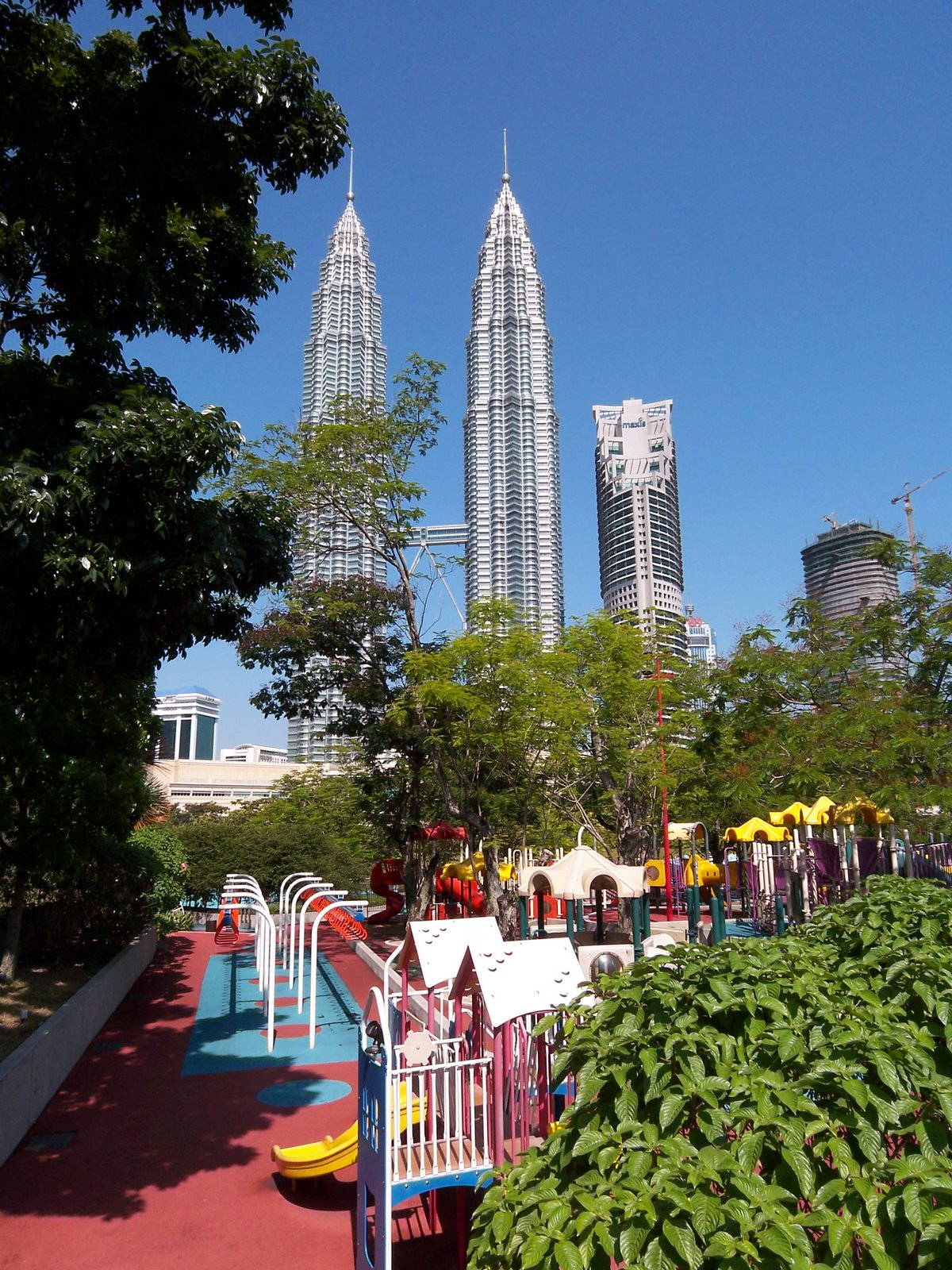


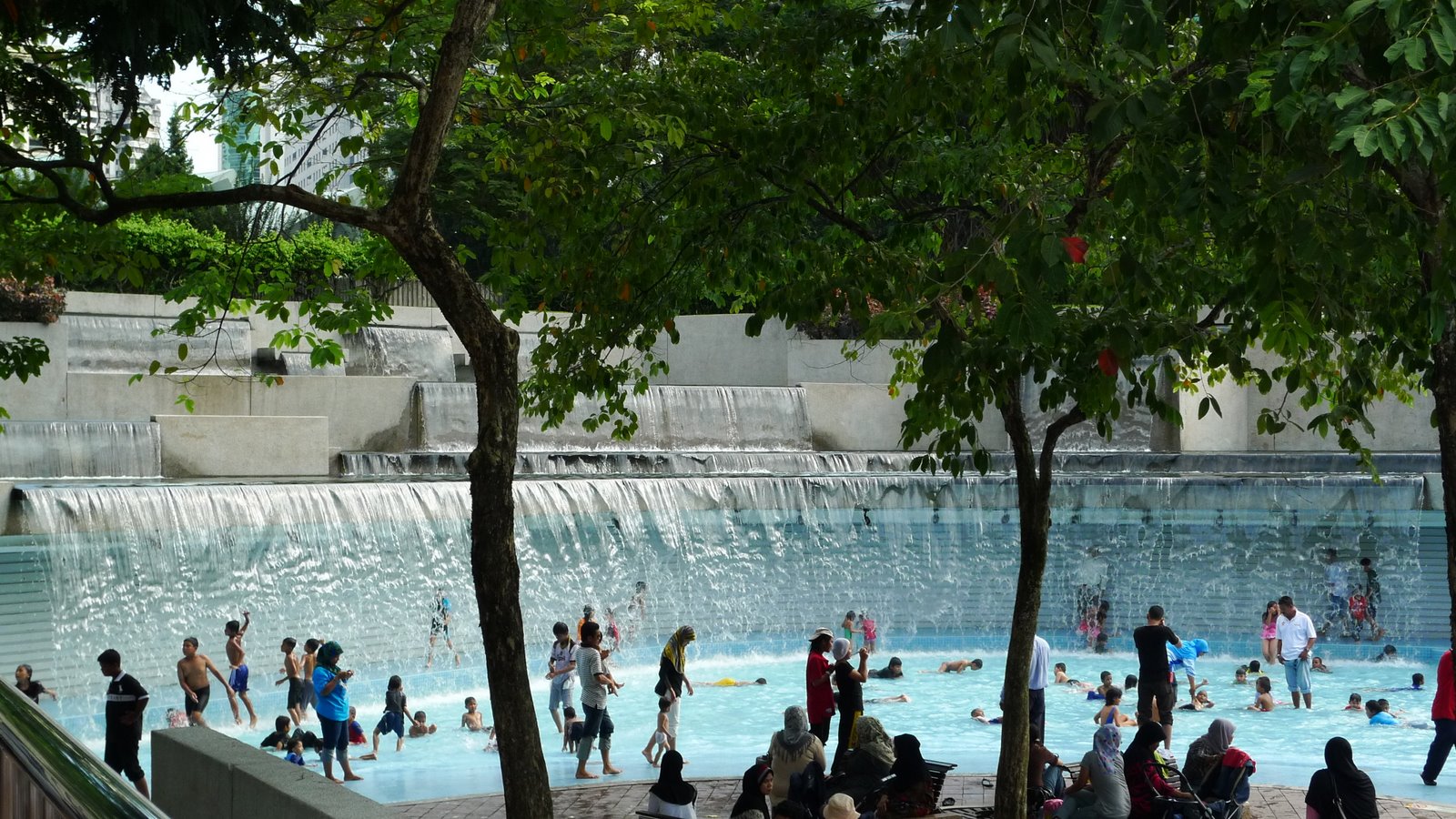
The Picasso of landscape architecture, Roberto Burle Marx (1909-1994) designed the Central Park of the Kuala Lumpur City Centre (KLCC)shortly before he died.
Roberto Burle Marx, a Brazilian, created gardens like abstract paintings, using native plants to create blocks of colour. Here are a few scenes at the park, which is actually on top of the enormous underground car park of the iconic Twin Towers of Kuala Lumpur. Judging from pictures of Roberto’s other gardens around the world, I think his garden in Kuala Lumpur would easily rank as one of his best works.

Tuesday, June 01, 2010
Living with poisonous plants
Yesterday I was interviewed by a Chinese language newspaper (Nanyang Siang Pau) on the subject of poisonous plants. There has been a spate of emails and sms messages saying that this or that popular house plant is poisonous and even cancer-inducing. As a result worried people have been throwing out their house plants. After the two- hour interview, I wrote a summary in English and sent it to the reporter to help her. Since I do not read Chinese, I have no idea what will finally appear in the Chinese press, but I thought my English summary might be of interest to blog readers.
Plants cannot run, fight or hide, so they make themselves inedible with poisons, otherwise they would get completely eaten up and become extinct. Animals that live on plants have some degree of resistance to plant poisons, but humans mostly lack such resistance. Salad plants have been selected and grown for their lack of poisons but such plants cannot survive on their own without human protection.
Some plant poisons act by contact. The most notorious are those of the poison ivy family which cause irritation in contact with bare skin. People learn to avoid touching these plants after one experience.
The most common plant poisons are tannins. Tannins react with proteins and are used to convert the perishable protein in animal skins into tough durable leather. Tannin will similarly react with the skin of the mouth and throat. Plants that contain tannins in large amounts are impossible to eat. Just try raw bananas or raw persimmons! When fruits ripen, their tannin content is deactivated to allow animals to eat the fruits and disperse the seeds. In dilute amounts, tannin is what gives taste to beer, wine and tea.
The next most common poison is calcium oxalate in the form of sharp microscopic crystals in the plant cells. When these cells are broken in the mouth, the crystals embed themselves in skin of the mouth and throat and cause swelling. The aptly named ‘dumb cane’ and other members of its family such as the popular ‘money plant’, as well as the ‘ZZ plant’ Zamiocalcus zamiifolia (marketed as a Chinese good luck plant), contain such crystals. Kids that put a leaf containing oxalate crystals in their mouths will learn never to put unknown plants into their mouths ever again, but it may be hours before the pain and swelling passes.
Then there are the plants that contain cyanide compounds, especially those in the tapioca (cassava) family that includes the ‘sweet leaf’ (sayur manis or Sabah vegetable). These poisons are totally inactivated by cooking. There was a case in Taiwan of death from eating raw ‘sweet leaf’, that caused a panic and a sharp drop in consumption of this popular vegetable when reported in the press. The person who consumed the raw leaves had done so deliberately in the belief that it would help her lose weight.
Finally there are the plants that contain alkaloids and other chemicals that can cause convulsions, breathing problems, nervous disorders, hallucinations or kidney failure. These plants are used to kill e.g. to tip arrows and darts for hunting and warfare, for execution (e.g. the famous case of Socrates who was executed with a drink of hemlock juice), for murder (when disguised as food) or suicide. Also to kill pain and give pleasure (e.g. opium). Many of these plants are used as medicines in small dosages.
Cases of accidental fatal poisoning by eating poisonous plants are extremely rare. The one case that everybody quotes is the deadly nightshade in Europe that has juicy delicious-looking but poisonous fruits. Because tomatoes resemble the deadly nightshade and belong to the same family, it took a very long time before Europeans would accept tomatoes as food after their introduction from the Americas.
In brief, fatal poisoning by accidental consumption of poisonous plants is almost impossible because poisonous plants are so unpleasant to eat and the human mouth is so sensitive to unpalatable substances. All the worry about poisonous plants is unnecessary.
Plants cannot run, fight or hide, so they make themselves inedible with poisons, otherwise they would get completely eaten up and become extinct. Animals that live on plants have some degree of resistance to plant poisons, but humans mostly lack such resistance. Salad plants have been selected and grown for their lack of poisons but such plants cannot survive on their own without human protection.
Some plant poisons act by contact. The most notorious are those of the poison ivy family which cause irritation in contact with bare skin. People learn to avoid touching these plants after one experience.
The most common plant poisons are tannins. Tannins react with proteins and are used to convert the perishable protein in animal skins into tough durable leather. Tannin will similarly react with the skin of the mouth and throat. Plants that contain tannins in large amounts are impossible to eat. Just try raw bananas or raw persimmons! When fruits ripen, their tannin content is deactivated to allow animals to eat the fruits and disperse the seeds. In dilute amounts, tannin is what gives taste to beer, wine and tea.
The next most common poison is calcium oxalate in the form of sharp microscopic crystals in the plant cells. When these cells are broken in the mouth, the crystals embed themselves in skin of the mouth and throat and cause swelling. The aptly named ‘dumb cane’ and other members of its family such as the popular ‘money plant’, as well as the ‘ZZ plant’ Zamiocalcus zamiifolia (marketed as a Chinese good luck plant), contain such crystals. Kids that put a leaf containing oxalate crystals in their mouths will learn never to put unknown plants into their mouths ever again, but it may be hours before the pain and swelling passes.
Then there are the plants that contain cyanide compounds, especially those in the tapioca (cassava) family that includes the ‘sweet leaf’ (sayur manis or Sabah vegetable). These poisons are totally inactivated by cooking. There was a case in Taiwan of death from eating raw ‘sweet leaf’, that caused a panic and a sharp drop in consumption of this popular vegetable when reported in the press. The person who consumed the raw leaves had done so deliberately in the belief that it would help her lose weight.
Finally there are the plants that contain alkaloids and other chemicals that can cause convulsions, breathing problems, nervous disorders, hallucinations or kidney failure. These plants are used to kill e.g. to tip arrows and darts for hunting and warfare, for execution (e.g. the famous case of Socrates who was executed with a drink of hemlock juice), for murder (when disguised as food) or suicide. Also to kill pain and give pleasure (e.g. opium). Many of these plants are used as medicines in small dosages.
Cases of accidental fatal poisoning by eating poisonous plants are extremely rare. The one case that everybody quotes is the deadly nightshade in Europe that has juicy delicious-looking but poisonous fruits. Because tomatoes resemble the deadly nightshade and belong to the same family, it took a very long time before Europeans would accept tomatoes as food after their introduction from the Americas.
In brief, fatal poisoning by accidental consumption of poisonous plants is almost impossible because poisonous plants are so unpleasant to eat and the human mouth is so sensitive to unpalatable substances. All the worry about poisonous plants is unnecessary.
Friday, May 28, 2010
Camellia japonica flowering in KL

Camellias flower all year on the highland resorts of Malaysia but not in the lowlands. I have tried for years to grow camellias in Kuala Lumpur, in sun as well as in shade, but even if they formed flower buds, the buds would dry up and abort without blooming. It has been terribly frustrating. Finally, one plant has flowered, after three years in a pot, under the shade of a langsat tree. The first flower, about 3 months ago, might have been a fluke. Now the plant is bearing its third flower, indicating that some barrier has been broken. Now we know it can be done, we can try harder to add camillias to our lowland gardens.
Sunday, May 23, 2010
Dipterocarpus alatus--iconic giant street tree of Ho Chi Minh City


I visited Ho Chi Minh City recently and was amazed to see giant trees of Dipterocarpus alalus growing as street trees in the older parts of the city. I estimate their age to be 80 to 100 years, which means they would have been planted during French colonial rule. Dipterocarpus alatus belongs to Dipterocarpaceae, which is the dominant timber-tree family of SE Asia. Dipterocarpus alatus itself is native to Burma, Thailand, Laos, Cambodia, Vietnam and Philippines.
In Malaysia and Singapore two other members of the family have been planted as street trees in the past 10 - 20 years. These are Hopea odorata (also commonly planted in Vietnam) and Shorea roxburghii. Both are doing well as street trees and will eventually become giants.
Subscribe to:
Posts (Atom)

